Monday, July 21, 2014

If You Read One Article About Ego Bait .. Read This One!

EGOBAIT and SEO
Nowadays, we live in the era of micro-celebrities (or influences, people who know how to sell their image). These are people become well-known within their very specific niche. may be you surprise when discover those people may have an average social media following (never be quick to judge by numbers! as I mentioned in my previous article), but they are able to influence someone and that someone may very well be your future customer or promoter.

I would start my introduction by the wonderful detention of content marketing:
Content marketing is creating a content strategy (from content creation to amplification) geared towards influencing not only your potential customer but also people who can influence your potential customer.

Influencing the influencer has becoming a more powerful concept recently as more and more online businesses are forced to become more niche-specific (while watching bigger brands taking more competitive areas).

In the sphere of marketing there are different ways to provide answers for growing business via social network and other channels, so we can extend the purposes of influence marketing to include:
  • Those who can influence your potential customer in any way (from promoting your brand to simply adding trust signals) 
  • People who can link to your site or encourage others to, did you hear about inbound marketing
I would say that social media marketing is considered as a most obvious way to build relationships with influencers. Yet, it is not the only way.

If you are not thinking “people” and “influencers” when developing your content marketing strategy, you are losing out.

The Concept of Ego Bait in Content Marketing:-

Ego bait is a widely used tactic to attract online influencers’ attention and turn them into promoters (or brand ambassadors if you like buzz words). The tactic is very useful way to attract the attention of a specific individuals or a group. I personally use the Egobait and work to speed on link bait and picking the right target.

  • The following types of ego bait are the more popular ones: 
  • Targeted ego bait (when you target one influencer) 
  • Group ego bait (when you target a group of influencers) 
  • Associated ego bait (when you associate yourself with micro-celebrities and thus attract more of them on board). The term has been coined by Anthony D. Nelson. 
  • Community ego bait (when you target the whole micro-community)
Targeted Ego Bait and Find the right partner

So what do you think about ego bait link building? Have you done it before? Did it work? Think about the methods you can use to get through to other like-minded bloggers and influential people in your niche.

When link building, you need the other party to notice you. Better yet, you need them to notice the benefits of being associated with you. People are often self-centered. It can be a bit difficult to get them to see your point if there is nothing in it for them. That is why Egobaiting can work wonders for your link building efforts.

With link building, you want to achieve as much success as possible. But this does not mean that you should seek to link to just anyone. Look at your options and select them very carefully. The things to bear in mind include relevance, likelihood of linking back and niche.

To sum up,  Link bait, share bait, click bait. These are all names for tactics designed to get a specific action from readers. Ego bait is the most common and easy to use. Here’s the what, why, and how of targeted blog mentions.

In my opinion, egobaiting is a marketing and link building technique, and as such, it should be focused on achieving an appropriate level of success.  Striking a balance between reader enjoyment and getting what you seek out of the deal is essential. 

This might mean selecting individuals based on how likely they are to link to you and help you in promoting the piece.  Of course you shouldn’t solely choose to target individuals based on how likely they are to link, but this should certainly be a consideration.

Saturday, July 19, 2014

Why Organization DNA is the Secret Ingredient To Differentiate

In a competitive industry, managing of any organization must continuously find ways to retain current clients and in the same time we need to create a effective strategies to attract new customers. This is especially true in these tough competitive markets and economical times.

In all of these changes and the direct impact of globalization did we ask ourselves where we are in all this, what the positioning map of our organization and what you offer to differentiate?

Why some organizations are able to face these changes and it can form themselves in a manner that make them able to compete and offer better services or products? While others can’t leave their corner of the ring without tripping on their own shoelaces?  To answer that question, I would say look to your organization’s DNA.

In science or in biology, we know that DNA does a lot of interesting things (some of which we don’t fully understand) but one of its main and most clearly understood functions is to tell amino acids how to line up and form themselves into specific protein shapes. Do you get the idea of “to tell amino acids how to line up and form themselves into specific protein shapes?” 

In business era the scenario is the same, you have to look beneath the surface at the organization’s DNA. Organizational DNA is a metaphor forth e underlying factors that together de fine an organization’s “personality” and helps explain its performance. 

The Organizational DNA framework was developed by Booz & Company to give organizations an easy, accessible way to identify and remedy the roadblocks that impede results:
  • “Everyone agrees on a course of action, but nothing changes.” 
  • “There goes another opportunity, while we wait for a decision.”
  • “It’s a great idea; it’ll never happen.”
  •  “I’m either micromanaged or left holding the bag.”
  •  “The businesses and functions just aren’t working together to get results.” 
  • “I don’t feel motivated to go the extra mile. What’s in it for me?” 
  • “We have the right strategy and a clear implementation plan, but we can’t seem to execute.” If any of these complaints sound like your organization, Organizational DNA can help.

The Five Building Blocks


Like the four nucleotides that comprise human DNA, there are four basic building blocks in any organization’s DNA—decision rights, information, motivators and structure. These building blocks and the way they combine largely determine how an organization behaves, and whether it can achieve results.

Yasser Al Mimar - DNA OrganizationDecision Rights: I would like to start with this sentence “We have five seniors in this department and no one find out a solution” The most important decisions in an organization affect not only the decision maker but also other members of the organization. At some fundamental level, every individual in organization is constantly making decisions and managing trade-offs, whether it’s how to price a customer quote, which engineering projects to fund given a limited budget, or what phone calls or e-mails to return first. How well and how efficiently they make these decisions largely determines the organization’s success in the marketplace. Decision rights—the underlying mechanics of how decisions are truly made—determine how well organizations work, how quickly the right new products/services get to market, and how much the organization spends to get results. Therefore, decision rights are the first building block that dysfunctional organizations should address; it’s the cornerstone of effective organizational renovation.

Information: I would like to start with sentence “I don’t have the information I need to do my job.” Poor information is the organizational equivalent of junk food. It clogs communications arteries, bloats the system with empty calories, and fools the body into thinking it’s nourished, when, in fact, it may well be on the verge of crisis. The effects of bad information on the other DNA building blocks—particularly decision rights and motivators—are powerful. Without accurate and available information, decision makers cannot make quick, smart moves in the market- place, and employees don’t receive the recognition—either positive or negative—that their actions merit

Innovation: “We should find out new application or system for new customers segment, but we need to find a way   to implement it” Innovation is one of the keys to success moving forward. Without exception, let me know if you can think of an exception. In most great businesses today, the executives need their people to bring outstanding, new ideas to life. However, the key question remains: how? Innovation is considered as powerful tool in DNA building blocks as it help your company to differentiate in the market and foster the right decisions that contribute to the sustain your business growth .

Motivators: “We paid bonuses, but no one seems to behave any differently.” Motivators include more than money; they also encompass all of the objectives, incentives, and career opportunities that prompt people to care and achieve. These rewards, both financial and nonfinancial, can encourage individuals to align their goals with those of the organization and pursue them in earnest...or they can, however inadvertently, stimulate counterproductive behaviors by driving a wedge between self-interest and the good of the organization.

Structure: “Here’s our org chart, but let me tell you how it really works around here.” Structure is the most visible and obvious of the four Organizational DNA building blocks, and it’s where most organizational change programs start. Structure should not be a starting point, however; it should be the logical outcome of the choices made regarding the other three building blocks. While important and potentially crippling if designed poorly, structure is the capstone, not the cornerstone, of most reorganization efforts.

Thursday, July 17, 2014

Don't Hold Back Your Social Media Strategy it is about Quality, Not Quantity

Starting a business is an exciting endeavor for every new business owner, and when you establish your own business and the doors finally open, many breathe a sigh of relief. You start think that the real work in starting a new business is getting your first customers. Am I right?

So your marketers start doing their work to win large customers by using different ways to attract attention and get your first pool of many customers. On the other hand, marketers believe that the number of followers they have is an indication of their success on social media. A recent Wall Street Journal article argued that social media is failing to live up the marketing hype companies originally expected. The reason for this is because many companies get caught up in the numbers game and focus their efforts on growing their audience on social media. A successful social media strategy should emphasize customer engagement and interaction with followers.


Quality Over Quantity

When it comes to followers, it’s about quality rather than quantity. Smart social media marketers realize that the number of followers is insignificant compared to the comments, engagement and interactions with followers.

Engagement with followers is a key to building your brand identity and online presence, which can lead to follower growth. Rather than focusing your efforts on gaining followers, your social media strategy should include daily social media monitoring, responding to followers’ comments, and analyzing data about your audience. Social listening is essential to help you understand your audience so you can create content that they will be interested in.

Customer Engagement Drives Social Engagement

A recent Gallup Survey shows that 72% of adults in the U.S. use social media, making it an effective platform for B2C and B2B marketers to connect with consumers. But the majority of consumers use social media to connect with friends and family, and are less interested in engaging with brands and learning about their products or offers. In fact, 62% of consumers said that social media does not influence their purchasing decisions at all. They’re more likely to listen to their family, friends or experts to learn about new brands or products.

Businesses need to reevaluate their social media strategy and initiatives to have a positive influence on the bottom line. If your company wants to acquire new customers, remember that customer engagement is driven through social engagement. Try engaging with your existing customers on social media and encourage them to advocate for your company.

Listen Up!: The Importance of Social Listening

The concept of social listening is nothing new, but many companies and organizations are now beginning to incorporate it into their social media strategy to improve the effectiveness of their social engagement. Social listening includes monitoring the conversations consumers have on social media and finding opportunities to participate and interact with existing and prospective customers. It can also give you insights on the type of content that will interest your audience and helping to identify industry influencers and brand advocates.

The social media team at American University of Sharjah does an excellent job on Facebook or twitter at responding to both positive and negative feedback. Take a look at the two tweets below:

@Maitha_AH You may not have to pay another deposit for change of major. For definite answers please contact infodesk@aus.edu. 

And @leasowwm Please contact the Testing Center through Tel: +971 6 515 1111; Fax +971 6 515 1011 or Email: testingcenter@aus.edu. All the best.

 
This is a great example of how social media can be used as an extended customer service. When a customer tweeted about issue they were experiencing with their deposit payment, American University of Sharjah clarifies the situation and offered a clear the picture to help resolve the confusion.


Tuesday, July 15, 2014

New to Information Technology in Social Development? Here’s What You Need to Know

Nowadays we live in an era where information is considered as a communication loop to know others, how they think, what they want and where they are. It's a professional businessperson's responsibility to know how to use information and technology to their advantage specially when start to promote your business and you have plan to find out who are your audience! This is critically important to internalize because the sooner you use the available technology to your advantage, the sooner you'll beat your competition in growing your business.

Information technology has been a key contributor to the major transformations on how companies market their products and services. Anticipating the impact of information technology is becoming more difficult. Businesses are e experiencing fundamental transformation due to the impact of information technology.

Information Tecnology

All new information technology (IT) systems bring a range of associated changes with them. These may be changes to the business process and procedures, new roles and responsibilities, organizational restructuring, new equipment or facilities, or new skills to learn. All these issues involve people and it is they within organizations that are the key to success of any IT implementation 

I would like to start with the simple things and clarify what is the significance of this article! If you do business outside your local calling area I believe you need to at the very least have a toll-free phone service. If you only work within a small geographic area, a basic local phone line will suffice. You also need a fax machine and fast connection to the internet. On the other hand, you don't want to waste your time or money on "economic" and you know the internet service will serve your need and the requested information will be coming and going as fast as possible. Am I right?

For instance, and away from the business life, the majority of people prefer to get their news from online news sources. And the majority of those are access the Internet from their smartphones/blackberries/iPhone/Samsung, so we find the technology has become a key factor in information transmission and considered a necessary part of any business.

I would say, with the proliferation of technologies that are able to overcome the obstacles of time and space in Information Technology such as (Video calls, Online Training, distance Learning and others on Internet applications), one would think that these tools would be used to gain an understanding of other cultures, meet people all over the world, maintain and strengthen familial relationships, communicate effectively with others, and help people to become more socially adept. Therefore, without new information and communication technologies none of what is changing our lives would be possible.

Many researches had assured that Internet today used by about 100 million people, and doubling this number every year is a channel of universal communication where interests and values of all sorts coexist, in a creative cacophony. What I have mentioned above was only about the internet technology and application. Did you ask yourself what about other information technology systems and applications that impact your business, such as modeling and software applications, wireless system or operating infrastructures?
Information Technology 

Furthermore, there are a number of technologies that can help you with various aspects of the business. They're fairly easy to use and will help you keep track of your business growth and make things easier when audit your business.  You'll also want some sort of customer relationship management (CRM) system. Being able to capture information about customers -- especially their preferences and quirks -- really helps with building repeat business. It can also help you see who your best customers are so you can market to them more effectively. You can either purchase software to run it yourself, or you can use a "hosted" model where you login on the Internet to use it but the supplier takes care of all the technical management.

In sum, information and communication technology is the essential tool for economic development and material well-being in our age; it conditions power, knowledge and creativity; it is, for the time being, unevenly distributed within countries and between countries; and it requires, for the full realization of its developmental value, an inter-related system of flexible organizations and information-oriented institutions.

Saturday, July 12, 2014

How to Easily Build a Powerful Employees' Performance

If you have your own business or you drive a company, I believe you are always looking to drive this business or this company forward! But the question is; can you do it alone? Or you need other elements to support you and keep your business in sustainable framework!

Did you ask yourself if your employees giving your company their all? Do they believe that what they're doing is important? Do they feel appreciated? Do they show up for work each day filled with passion and purpose?

For business leaders in any organization of any sizes, the writing's on the wall: You can make and save money by keeping employees engaged.

From my perspective I would say; to make your workers more engaged, more satisfied at work, and more likely to stay at your company--try adopting these sustainable work practices.


Every company wants to drive sustainable high performance from employees. But many leaders make the mistake of not starting with themselves.  As a leader, what is say is important. But it's what you do that is mirrored by your employees. If you want your employees to perform at a high level and not burn out, you better take on sustainable work behavior on the physical, emotional, mental, and spiritual level. 

Fact says that many bosses practice unsustainable work behavior, leading to stressed and unhappy employees who are distracted by their search for their next job. According to a Harvard Business Review study, only 25 percent of 19,000 employees from around the world said their leaders model sustainable work practices! 

For instance, organizational leadership or managers support have been identified as key determinants of the success of organizational environmental initiatives (e.g., Ramus & Steger, 2000). Leadership plays a role both in communicating the importance placed upon environmentally sustainable behavior by the organization and in providing a role model for the desired action. Furthermore, the opportunities for employees to be able to engage in environmentally sustainable work behavior can strongly influence action.

Today's entrepreneurs must make it a priority to get to know their employees so they can provide whatever's needed to keep them fully engaged in what they do. This creates wins for everyone and helps to boost company performance.
In this article I would list below four fundamental way or behaviors you should be modeling that help to enhance your employees’ performance, which will be reflected positively on your company growth

Encourage Vacation.
What is your company’s policy on vacation? How do they encourage (or discourage) employees to take vacations and breaks? Take one yourself.  Do you encourage your employees to take lunch out of the office, take short breaks, and go on vacation? You need to do all of those things, too. It's not just so they work harder, more efficiently, and line your company's pockets with more revenue. It's to ensure they are less likely to quit. I would strongly say, employees are more likely to come back refreshed and full of new ideas. When an employee returns from a well-deserved vacation, you will begin to see their work progress and their attitude improves.

Don't email over the weekend.
If you email late at night and over the weekend, what kind of message do you think that sends to your employees? Even if you say explicitly "I don't expect a reply over the weekend," what do you think someone under your employ is going to do? "But once again, their behavior speaks louder than their words. If you feel compelled to write emails at all hours, I would suggest to park them in your draft folders and push the send button during working hours!. During office hours do you expect an automatic reply? It's important for everyone to have some time to concentrate on their work without distraction. 

Show appreciation, Reward and recognize employees.
Employees have emotional needs that need to be met at work. If you do not recognize and appreciate your subordinates, they'll leave you and get it somewhere else. There is a study shown "findings strongly confirmed the adage that 'people don't leave organizations, they leave leaders.' When employees in this study felt valued by their leaders, for example, they were 1.3 times more likely to stay with the company," the duo writes. Remember to celebrate both accomplishments and efforts to give employees working on long-term goals a boost.

Clearly communicate about your company goals
Employees can't perform well or be productive if they don't clearly know what it is they're there to do and the part they play in the overall success of the company. Be sure to communicate your expectations--and to do it often. Leaders or Managers need to fulfill employee's spiritual level too!

Friday, July 11, 2014

Ways to Engage with your Customers and Make Best Content Marketing Tactics

Connection or engagement with your clients is one of the highest goals of a content marketer. True content marketing goes far beyond self-promotion to encourage solid engagement and a two-way conversation between brand and consumer.

Tactic One that content marketers are using is Social Media as tool to enhance and support the network engagement , whether they’re building a presence on LinkedIn, Facebook, Twitter, Instagram, Google+ (just to name a few) or even Blog.  Although not all marketers have confidence that their social media efforts are working, the adoption rates continue to soar. 


Nowadays, everybody knows a fact says social media can be a great way to build your brand’s voice & persona while becoming the star outlet for spreading all this content you’re creating. Marketers can buy different forms of advertising on these sites. They can also create their own corporate profiles and try to build relationships with potential customers and provide service to current customers.

2. Educate

Be an expert! Consumers today are thirsty for knowledge and are looking for companies who are the experts in their field.  On the hand, we have to do it better than our competition. Every dollar must be spent efficiently and productively, working to create a powerful marketing strategy content.
From my perspective, blogging is an exceedingly effective method of generating content and sharing your know-how, and these can be created fairly quickly (just don’t forget to post on the regular!).

Having a good blog with a lot of good content and being able to share them on social media platforms with lots of followers and fans can be a really good start.
But the marketing material you should never forget to use in your content marketing strategy; is a White Paper. In today’s competitive climate, it’s not about claiming that “you’re the best.” To a degree, it’s not even about actually being the best. It all comes down to proving you’re the best. You have to demonstrate your expertise to your target market!

White Papers, though longer form than blogs, are another fantastic way to educate your audience. White papers differ from blogs and other form of content as they have a tiny bit of direct marketing messages in them. Most of the white paper is generally content, but a small fraction of a white paper consists of direct marketing material. From there, you can even create a case study on how your company helped a customer with this particular issue, demonstrating your commitment to your customers while confirming your expertise on that subject.

3. Entertainment

Cat videos get clicks, but it doesn’t mean they will get you customers. Entertain your audience in a way that makes sense for your brand by generating interesting content and presenting it in an entertaining way. It includes the different aspects of traditional marketing that we see every day. Some of these aspects include sports marketing, branding, public relations, endorsements, digital marketing, and social media marketing. Build a voice for your brand and be consistent and engaging.  Customers will respond positively when done right. Videos, blogs, social media accounts, anything that you publish – is a way to entertain and engage your audience with a likable, relatable persona.


4. Tell and update

Use different content marketing tactics to update your audience on what’s happening in your company and the industry as a whole. Newsletters, eBooks, digital and print magazines all serve as informational hubs for your customers to learn more and continue envisioning you as an expert. 

5. PR (Press relation)

Use professionals PR who Their job is to identify what would make an interesting story about your company that the journalist would want to write about (most journalists do not want to write ads). The PR professional then writes a press release, which should sound just like a real news story.

Try always to contact the right journalists and news media, and pitch the story to them. However. The payoff of good PR is high, but that means the risk is also high. If you want control, then you have to buy traditional advertising like everyone else.

A content marketing cocktail is your best method to build up your brand, each tactic you adopt will lead you to customers at different stages in the buying cycle. And each piece of helpful content on your website acts like a fishing line getting pulled behind a fishing boat. The more lines you have in the water, the more fish you can catch. So stretch your content creation muscles pick up that pen and start creating content today. Your audience (and your bottom line) will thank you for it!

Monday, July 7, 2014

The Best Ways to Utilize Make an Investments

A distinction should be made between investing in one’s own business,  The key point about financial investments is that you can choose them, you can sell them, but what you cannot do (unless you are Warren Buffett) is influence their performance. 

Obviously, you make an investment with a view to getting a return on it.  However, what precisely is a return?  It has two components: the market value of the asset and the cash flow from it.  The two are intertwined; for example, an older bond with a coupon higher than would be offered by a similar bond today will see its market price go up.  In fact, there are quite precise calculations to show this effect, which will be covered in due course.  Nevertheless, if you hold a bond to maturity, you know what its value will be at maturity; it will be the par value and it is that which you will get back


Likewise, a share offering a good dividend will be valued, under normal circumstances, more than a share generating as much profit, but not distributing that profit partly by dividend.  It must be admitted, however, that some hi-tech companies even boast that they do not distribute dividend as there is so much potential for company growth in the future. 
Measuring return when only capital growth is involved is very simple.  You take the ratio of the end value to the starting price and take the nth root of that ratio, were n is the number of years that the investment is held. 

According to measuring return part, I would say, we need to find out what are the best possible investment choices for our life and devise a workable plan on how to achieve our financial goals; therefore I would prefer to buy shares or bonds which are safer and find out the best ROI, return of investment for me. 

Therefore, we need to put everything on the table and keep on mind two main options and compare which way is useful and has good ROI and NPV, as we know the NPV (Net Present Value) does provide the investor with a quick and easy way to determine whether the price that will be paid for the share or bond and even the property will yield the investor's desired rate of return (i.e., discount rate), therefore I moved to the direction of buying shares that issued by known corporate or semi government. As we know the safest type of share the one that considered as semi government share is not because government are particularly responsible, but because they can, in principle, more secure, considered safe investments as the government is unlikely to go bust. 

ROI and Stock Market

For instance, Dubai Islamic Bank  Dubai Islamic Bank (DIB) shares ended 2013 at Dh5.36 each, a gain of 166 per cent.  The emirate’s largest Sharia-compliant lender benefitted from a sector-wide increase in lending. DIB increased its shareholding in the property lender Tamweel to close to 90 per cent, paying off its bilateral facilities in September.  In December, the bank announced plans to increase the percentage of its share capital available to foreign investors to 25 per cent from 15 per cent. This is in line with other local institutions looking to attract international funds in the run-up to the UAE’s upgrade to emerging-market status.  

Other example, Etisalat  which is the second most heavily weighted stock on the Abu Dhabi index, accounting for 16.4 per cent of the index’s weight (only First Gulf Bank counts for more, at 27.3 per cent).  The telco’s shares surged by 161 per cent during 2013, ending the year at Dh 11.70 each.  The operator announced its first overseas acquisition in five years in November, agreeing to pay $5.7bn for Vivendi’s 53 per cent stake in Maroc Telecom after protracted negotiations with the French conglomerate.  At home, the introduction of mobile number portability could affect the operator’s subscriber base in 2014. 

Saturday, July 5, 2014

8 Questions To Ask Before You Redesign Your Website

Deciding to embark on a website redesign – not a minor tune-up, but a significant overhaul – is not a small undertaking. So if the idea of doing some deep examination and contemplation before digging in seems a little tedious, there’s a reason why.

The following questions will create an exercise in fully exploring the many aspects of a website redesign. The idea is to most accurately assess what your site is doing well, what problems need to be solved, and what other parts of your branding and content strategy could be bolstered in the process. If you’re going to do it, you might as well do it right. 


1. What are any obvious problems with site functionality?
Sometimes you go into a site remodeling project with just a general goal of updating things, reflecting the most current image of your brand and services, and keeping up with progress in your industry. Other times, your site is actually a real mess. If there are glaring problems, obviously make sure those are solved for in the new version of the site.

2. Do customers have the same complaints?
As always, people who use your site will have a much clearer perspective on the true functionality and ease of use of your site than you will be able to. Listen to the feedback you’ve gotten – chances are, you’ll see a lot of the same criticisms over and over. This is invaluable info when it comes to figuring out how people are using your site, and how it could serve them better.

3. What are our competitors doing?
Copying exactly what your competition is doing will never result in you pulling out ahead of them. So when we say to stay aware of what comparable companies in your industry are up to, the idea is to make sure you’re keeping up – and then going a few steps beyond that. You should always strive to be the player in your industry who is defining what comes next. It’s easier to do that when you know what everyone else is doing.

4. Do all of our third-party apps work?
If you employ tools on your site that originate elsewhere, make sure you’re using the most updated versions, which might require making adjustments to your site to maintain compatibility.

5. Has our company/service/product changed?
Companies are much more human than most people might think – instead of staying exactly one way, they grow and change over time. If you haven’t updated your website in a few years, it might be that it’s reflective of an outdated version of your company. Smart small business owners are unabashedly unafraid to let their business evolve – the smartest owners make sure that the support pieces (like the website) keep up with that evolution.

6. Are we re branding?
Because that’s a much more complex project. I am not saying don’t do it – re-branding is exciting and sometimes very necessary! – but definitely don’t move forward until you’re really thought about the difference between redoing your website and making over your brand entirely.

7. Are You going to use someone in-house to lead the design, or contract out?
At this point, your website is as much the face of your company as any brick-and-mortar office (if you even have one.) So this isn’t the area to cut corners. If you happen to have someone on staff who possesses the skills to carry out this project, that’s great – you’ll save time and money. But if you don’t have someone already on your team who can genuinely do this job as well as it can possibly be done, don’t let your desire to save time and money force you into making sacrifices on the quality of the end product. There are a lot of brilliant web designers out there – it’s more than worth it to invest in working with one.

8. How does this fit into our content strategy?
Good website content is an indispensable component in marketing and customer retention. Your existing site probably was already crafted with SEO considered, but there’s nothing wrong with making sure you’re absolutely maximizing the benefit of strong content while you’re in there making changes

Friday, July 4, 2014

Will SEO Ever Drive the Business World ?

A couple days ago, I got a call from one of my friend, who own a company produces potato chips; he was frustrated by his confusion around his company sales and customers attraction. He felt like he just couldn’t get a straight answer about the strategy that he should follow to attract people to his company product.

I set up a meeting with a marketing staff group who are working in his company in order to sketch out a road map of adopting SEO tools as a primary marketing strategy. Here’s what I explained to them:

Search engine optimization (SEO) is equally important for startups as well as established firms. Google GOOGL +0.56%, Bing, and other web searches are often the starting point for consumers seeking information or looking for businesses on the web.


According to Vocus, 82% of mobile shoppers use search to influence their purchasing decisions, and 70% of mobile searches for products or services will result in a sale in the near future. As such, being easily findable and accessible via search engines is a vital element of operating any kind of business. For entrepreneurs, that importance is magnified. Here are the main two aspects that SEO is uniquely important for entrepreneurs.

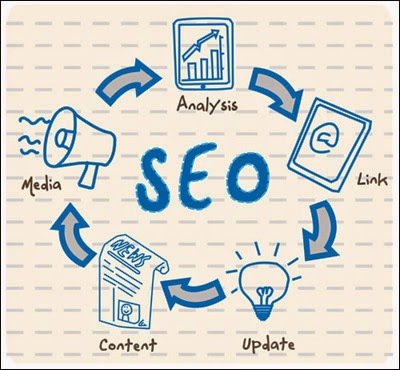
If we want to apply and adopt SEO tool we should put in our consideration two main elements: on-page aspect, which include site context and content, legibility, and accessibility to search engines; and off-page aspect, including backlinks and the social network that influence the degree to which search engines think a site is important.

From on- page aspect, focus on creating high-quality, interesting and relevant content to keep your business website on top of the search engines. So creating an interesting content and keywords or a success story that are relevant to your business  can lead to an increased number of people using and linking to your site, this in turn, will give a chance to your customers and potential customers to know your product and increase engagement with them . Therefore you need to make sure that your content gets noticed is the other essential part.

For me, good content means the content that support self-promoting and build up your brand and position among the competitors. It’s also about building trust and positioning your brand as an authority within the field, saying something unique and of value, without simply boasting about your own successes. Sharing wider, relevant news is paramount to this.

Keyword and content is the most strategic way to get inside the minds of your target market as content marketing is a valuable marketing strategy for startups and support your business. Understanding what keywords are being used to find your website (as well as your competitors’ websites) can inform your overall marketing strategy on many different levels, from subject lines used in newsletter emails, to press release titles, and more.   I believe you may ask why we need to focus on keywords and content on one hand and SEO on the other hand, I would answer SEO go together like bread and butter with content. They complement one another in an inseparable kind of way.

 
From off-page aspect, Social Media marketing has become intertwined with SEO; not only do social signals play a role in organic search rankings, high rankings in organic search results drives more traffic to your website whether your offering product or service, and social media channels, accelerating their growth. Therefore, get people interested in your products, or increase sales conversions, social media can help. But the social media marketing landscape is murky: there are numerous potential channels available and they don’t all yield the same ROI.

SEO yields the most strategic long-term investment. I would say, that SEO is a remarkably valuable investment for entrepreneurs looking to kick start their business, establish credibility and trust, secure investments, and build a sustainable business for long-term success. From my perspective, if we apply the right SEO tactic we will drive the rudder in the right direction and get best results.

Thursday, July 3, 2014

Why The Future of leadership Depends on Sustainability

To begin with, I would start the introduction of article by this quote - “It is not the strongest of the species that survives, or the most intelligent, but the one most responsive to change” by Charles Darwin about The Need to Respond to Sustainability.

When we talk about Sustainability it doesn’t mean we should only focus about planet aspect without including the other major elements. Sustainability does not simply mean whether something can last. It addresses how particular initiatives can be developed without compromising the development of others in the surrounding environment, now and in the future (Hargreaves & Fink 2000).


http://yasseralmimar.blogspot.ae/2014/06/information-technology-and-sustainable.html

In every era, some organizations or companies are judged to be leaders. What earns them this distinction and differentiate, however, this is not always considered as constant. The criteria that define “leadership” have developed over time and began to take different concept. I recent years the yardstick has been the ability to innovate. Today the framing of corporate leadership is shifting again, to a concept that encompasses the learning and best practices from all these antecedents: corporate sustainability. 

The move towards sustainability is not simply to achieve a worthy cause, nor is to convince the relevant institutions that we are corporation cares about the environment. Rather, it is recognition that those who can make efficient and responsible use of natural resources and human capital are more likely to be the destination of choice for talent and investment. Therefore, as mentioned earlier concept of sustainability extends beyond environmental impact, although this consideration naturally looms large especially for manufacturing and extraction businesses. Today, sustainability assessments include environmental and social practices, as well as related governance.


Most large companies acknowledge the need to be more responsive to shifting societal expectations, to be better able to establish trusting relationships with stakeholders, and to become more open and accountable. And yet those same companies often struggle to translate good intentions into good practice.


There are several examples show how the sustainability integrates into the brand and client value propositions, for instance, IBM decided earlier than many to integrate sustainability into its brand and customer value propositions. It has effectively used its Smarter Planet TM theme to communicate how the company helps its clients enhance their performance in ways that foster sustainability. Recent IBM advertising has been focused almost exclusively on outcomes and social benefit, rather than products and services. While some companies such as Intel choose to build reputation through secondary communication channels, most of the study’s Leaders follow the IBM example. 


To sum up, sustainability leadership offers new ways to respond to today’s leadership challenges. The traditional leadership metrics that developed out of an industrial frame is no longer sufficient. In the competition market today, the focus is pouring on individual and corporate goals, shareholder value, and the financial bottom - line. As Kotter said; Sustainability leadership – like all leadership – is fundamentally about change, as it often entails engagement of uncertainty and the unknown